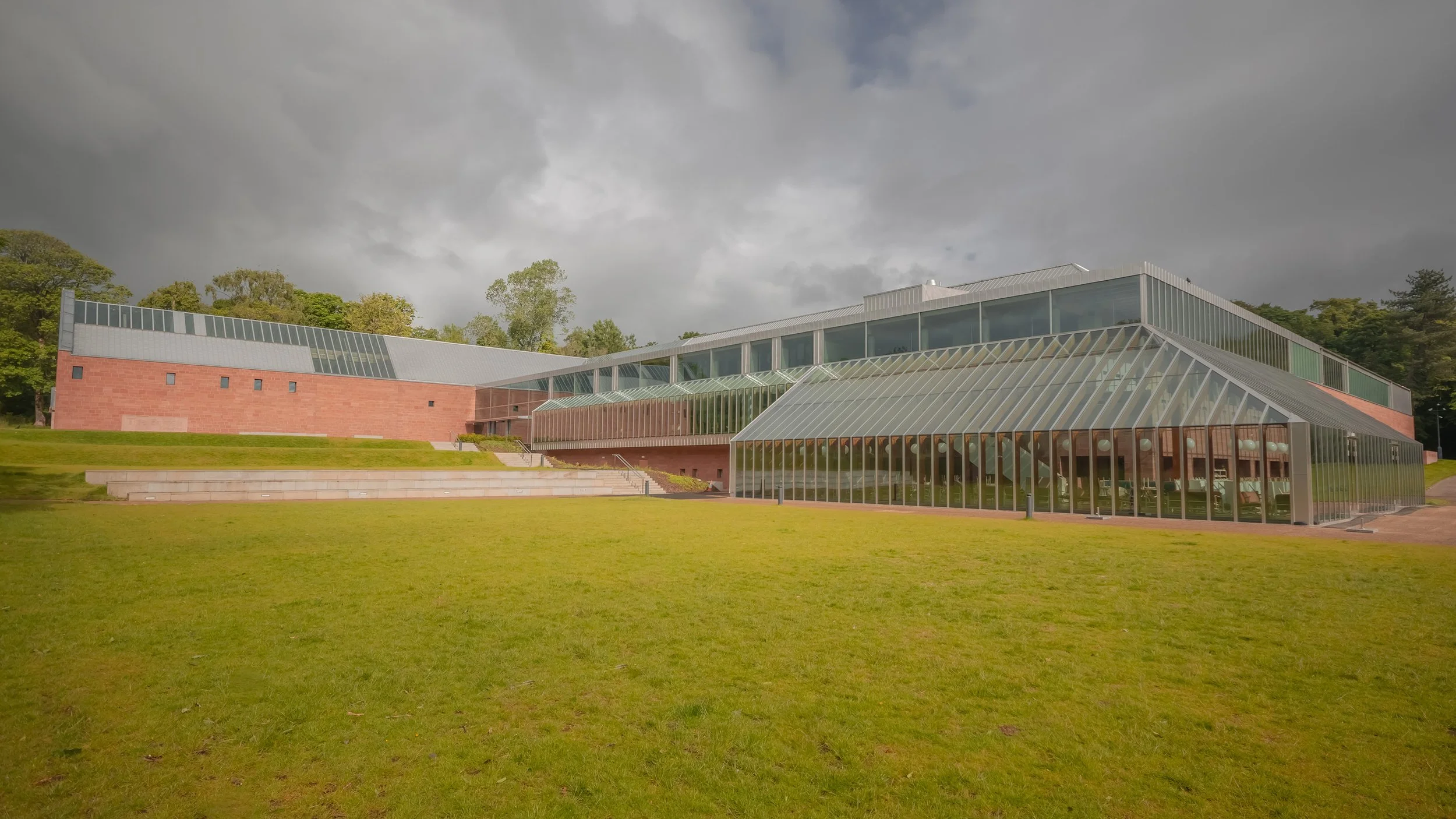
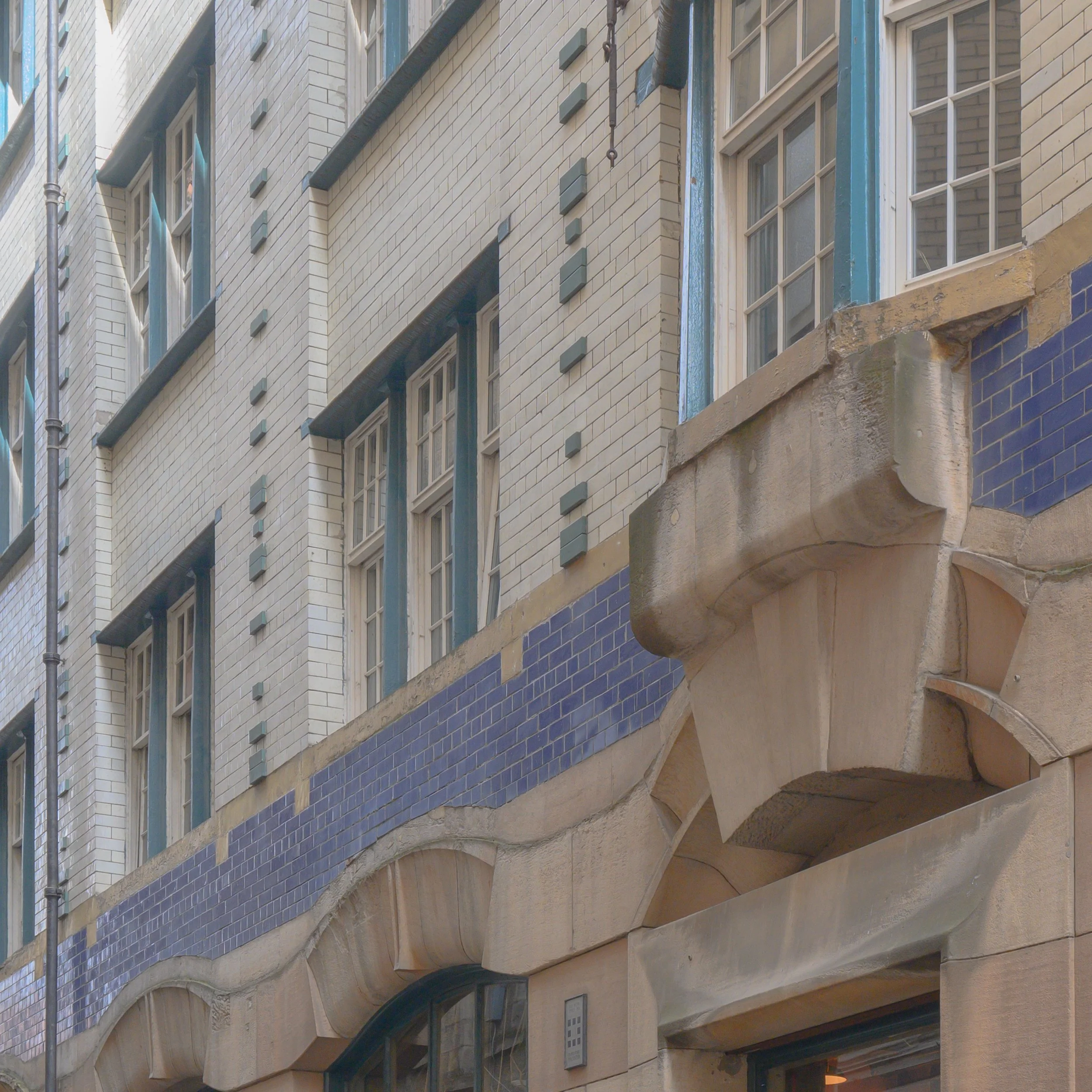
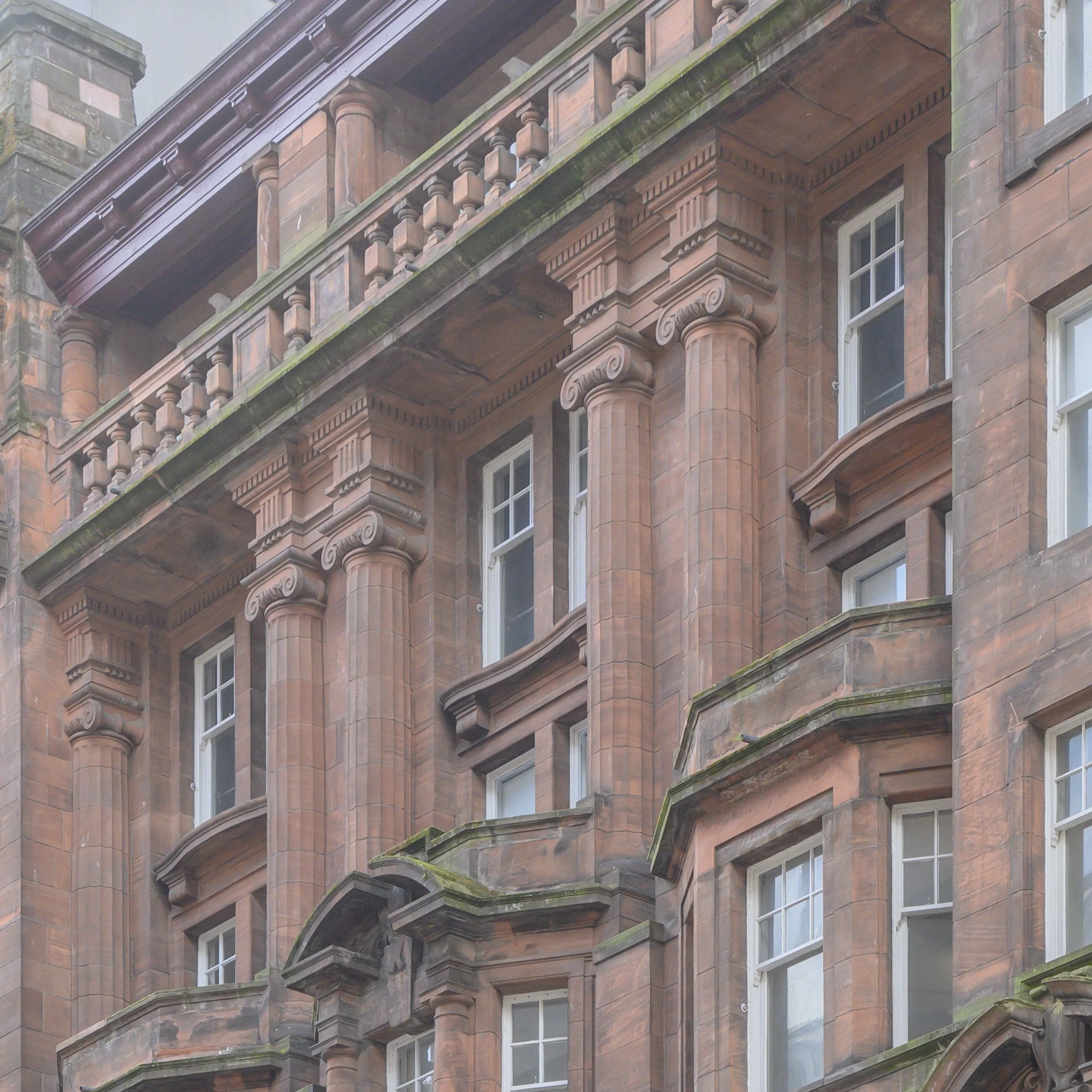
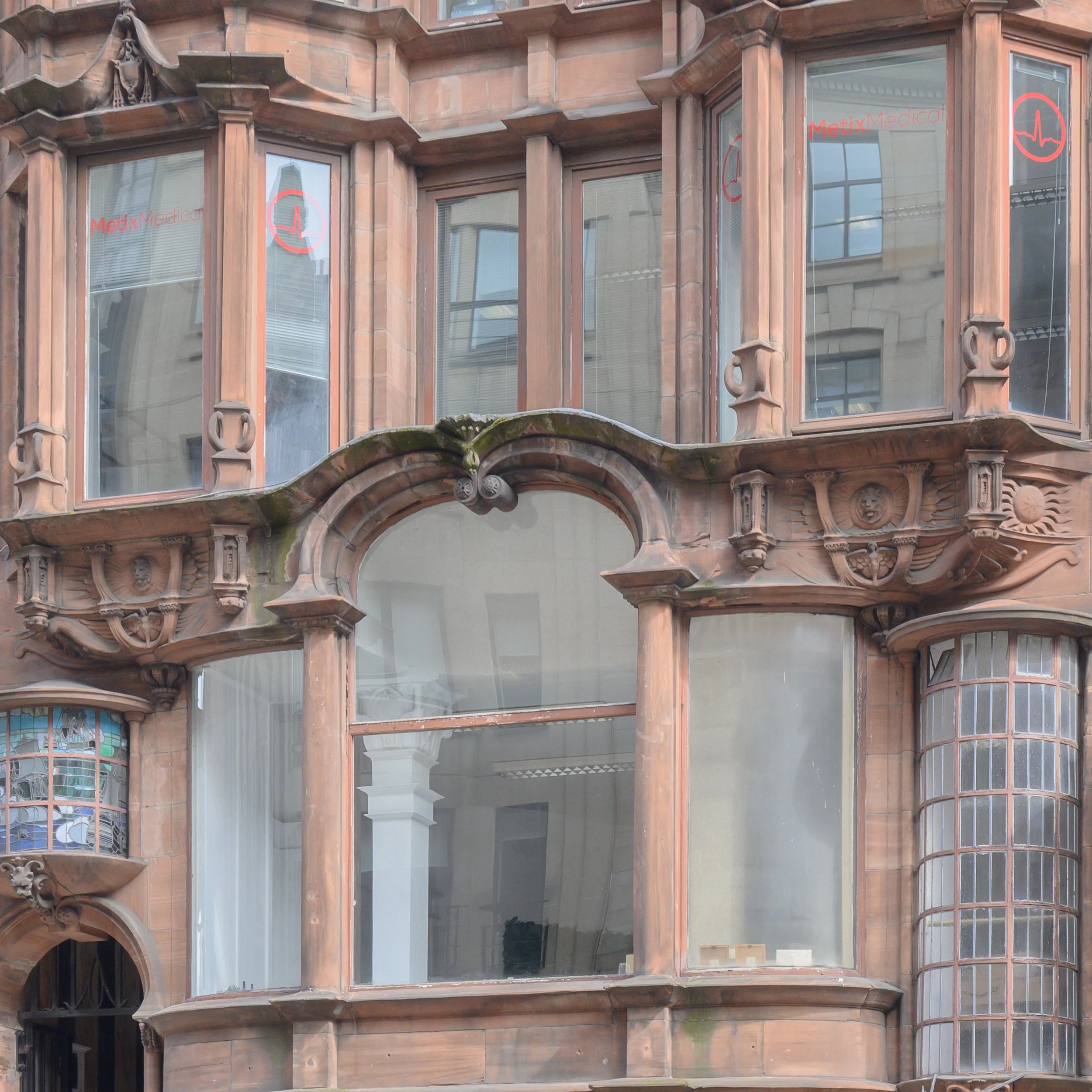
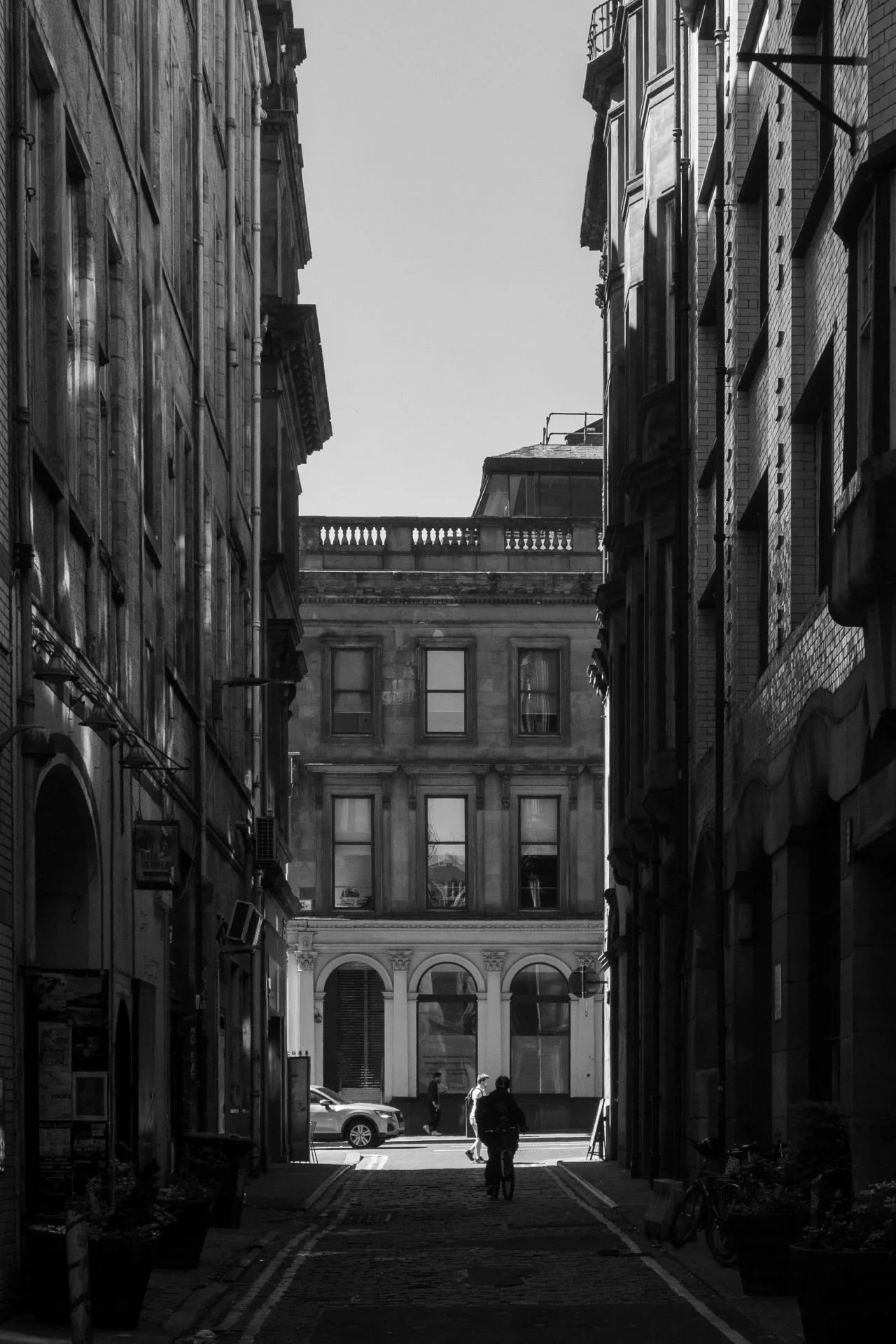
Glasgow is a city to be read through its layers: a merchant city, industrial city, modern city, creative and cultural city. It is a city that surprises people with its 19th Century urban grid and beautiful sandstone buildings.
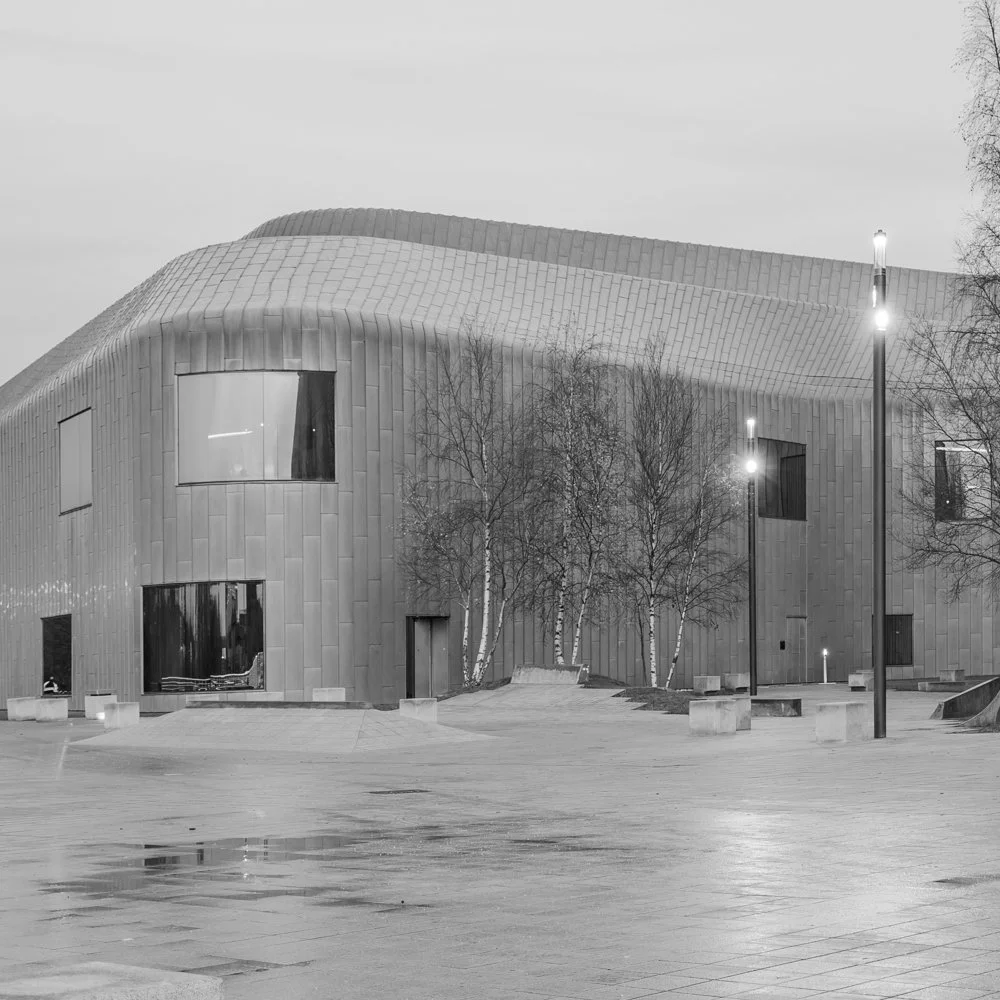
These stand in contrast to the modern, post-war experiments on the edges of the city centre which are now being reconsidered and re-appraised.
The city is home to a vibrant community of artists, designers, musicians and folk-of-all-sorts who give an energy and character that anyone who has visited will testify to.
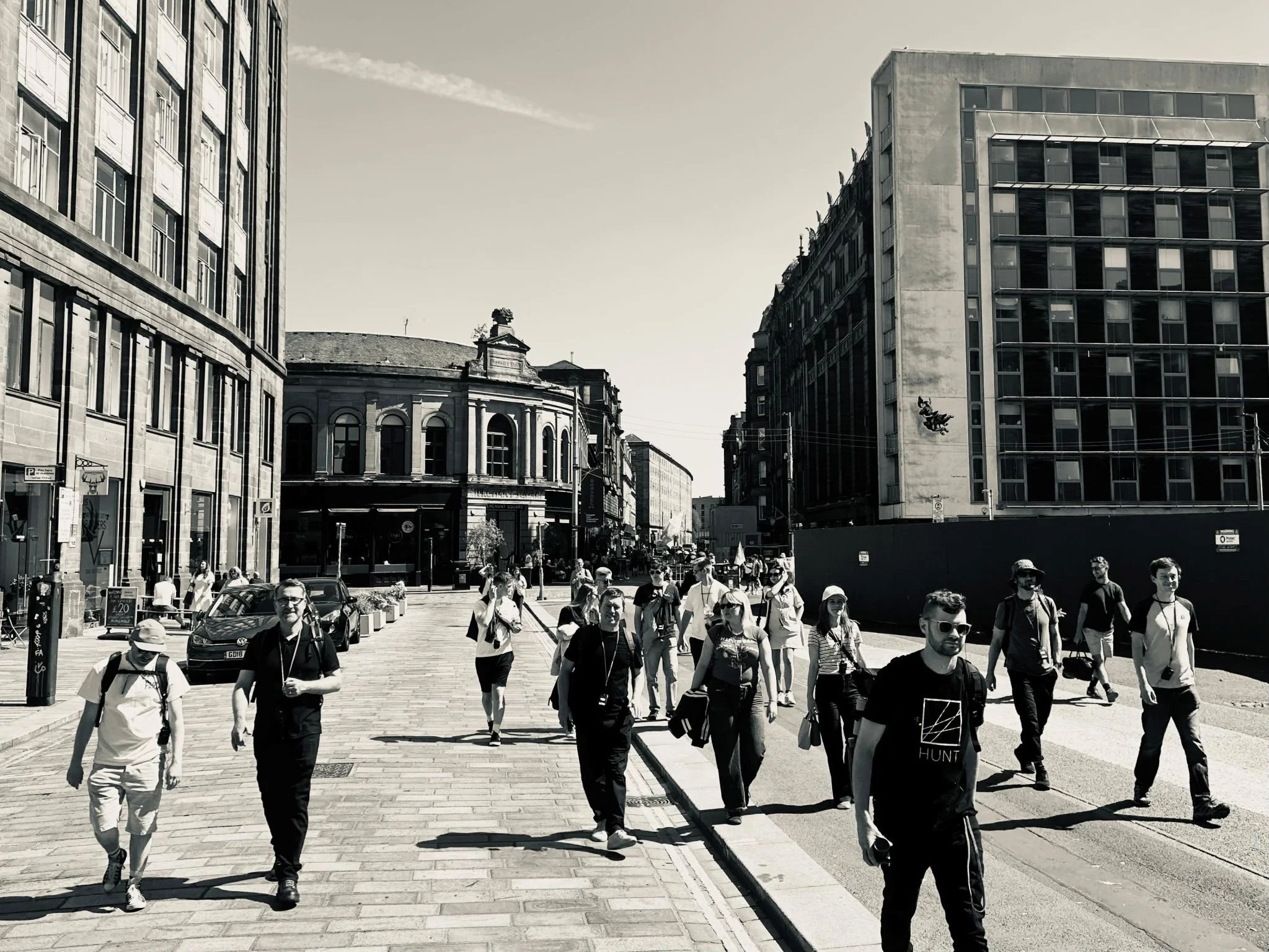

A city shaped by industry, invention and continual transformation.
Glasgow is a city of powerful contrasts: monumental Victorian streets and post-industrial landscapes, dense urban blocks and open riverfronts, grand civic buildings and experimental contemporary architecture.
Its character is inseparable from the River Clyde. The river drove Glasgow's extraordinary industrial expansion during the nineteenth and early twentieth centuries, when shipbuilding, engineering and manufacturing transformed the city into one of the world's great industrial centres. The legacy of that period remains visible in the city's architecture, street patterns and infrastructure.
At the heart of Glasgow, a distinctive grid of streets is lined with sandstone buildings, warehouses, civic monuments and commercial architecture. This urban fabric provides the setting for some of Scotland's most significant architecture, from the work of Charles Rennie Mackintosh to the city's rich collection of twentieth-century buildings.
A city in transformation
Today, some of the most interesting architectural questions are being played out beyond the historic centre.
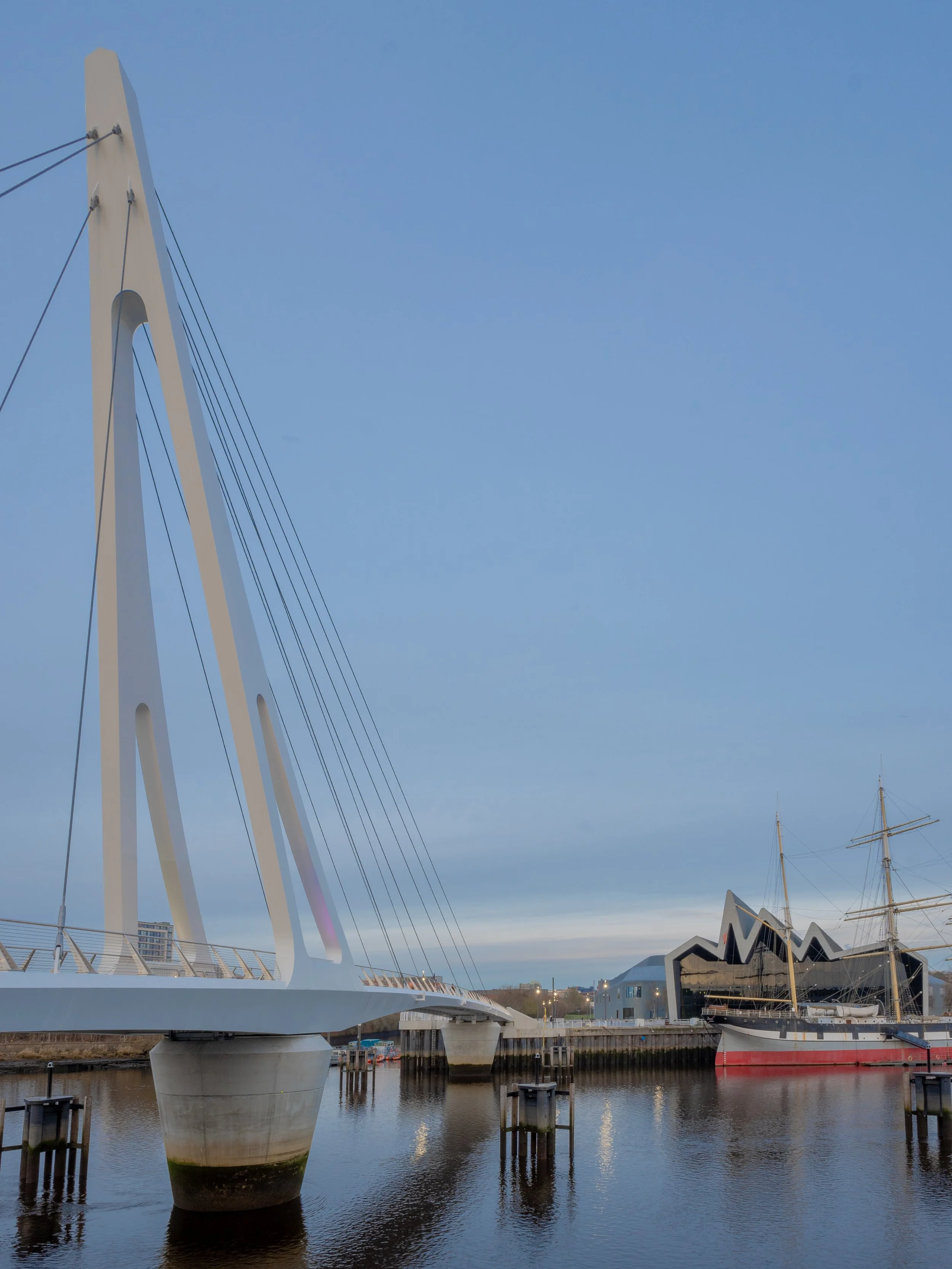
The River Clyde is once again becoming a focus for urban development. Former industrial land is being transformed into new neighbourhoods, cultural destinations, workplaces and public spaces, while the city is exploring how to reconnect communities with a river that was once central to Glasgow's economy but became increasingly separated from everyday urban life.
Across the city, there is also a renewed interest in living in the city centre, bringing new housing and mixed-use development into areas previously dominated by offices, commerce and vacant sites. Glasgow's current planning strategies place particular emphasis on regeneration, active travel, green infrastructure and the reuse of brownfield land.
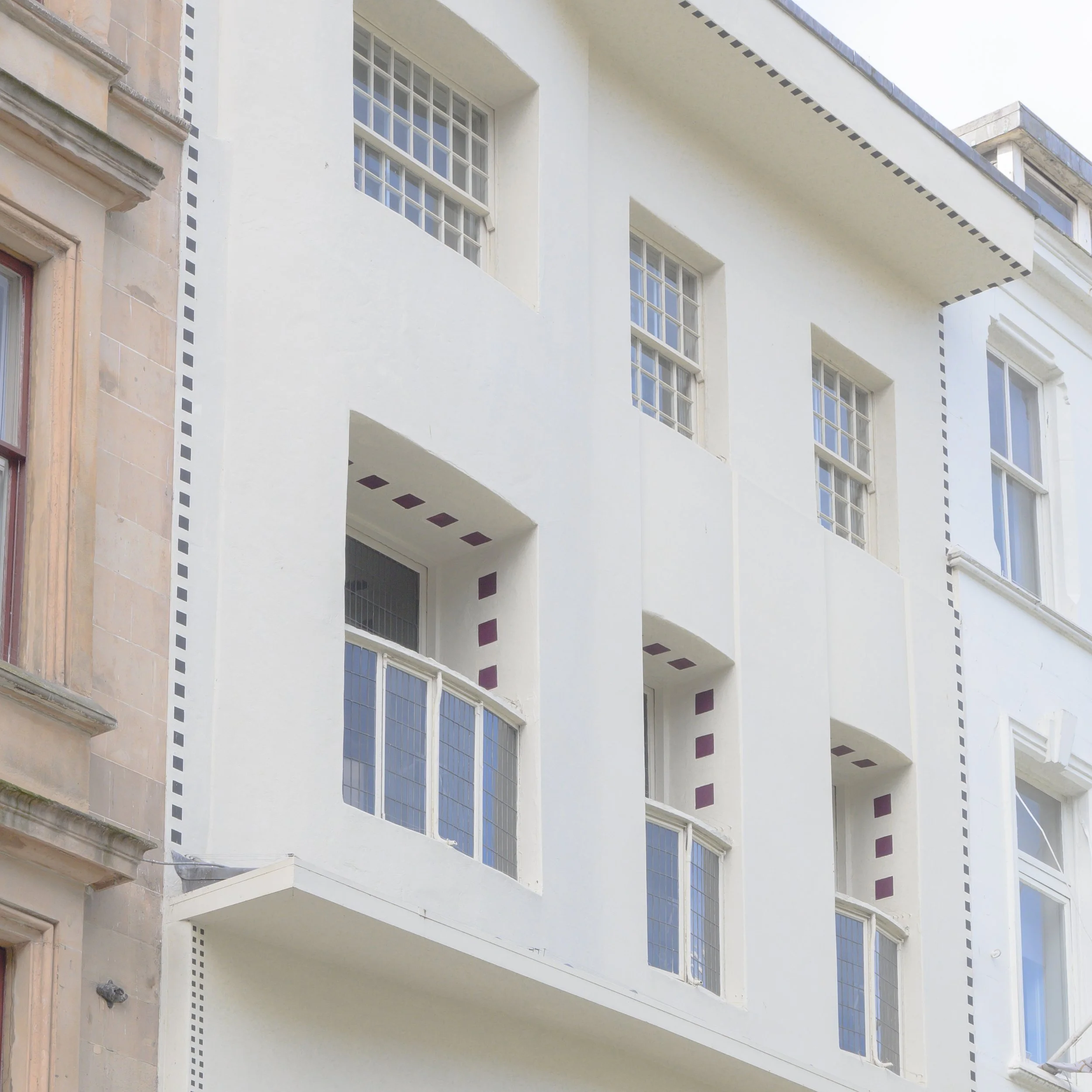
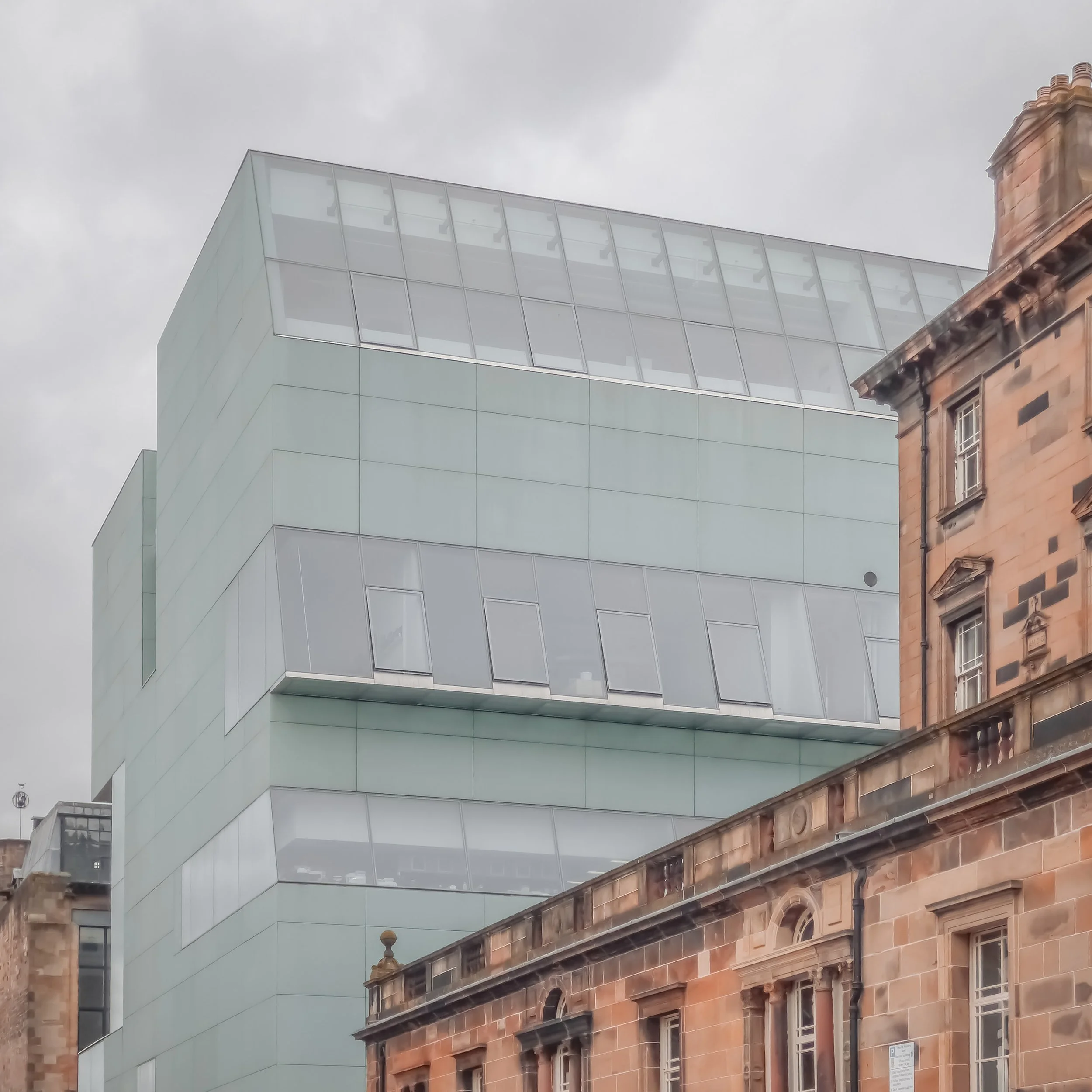
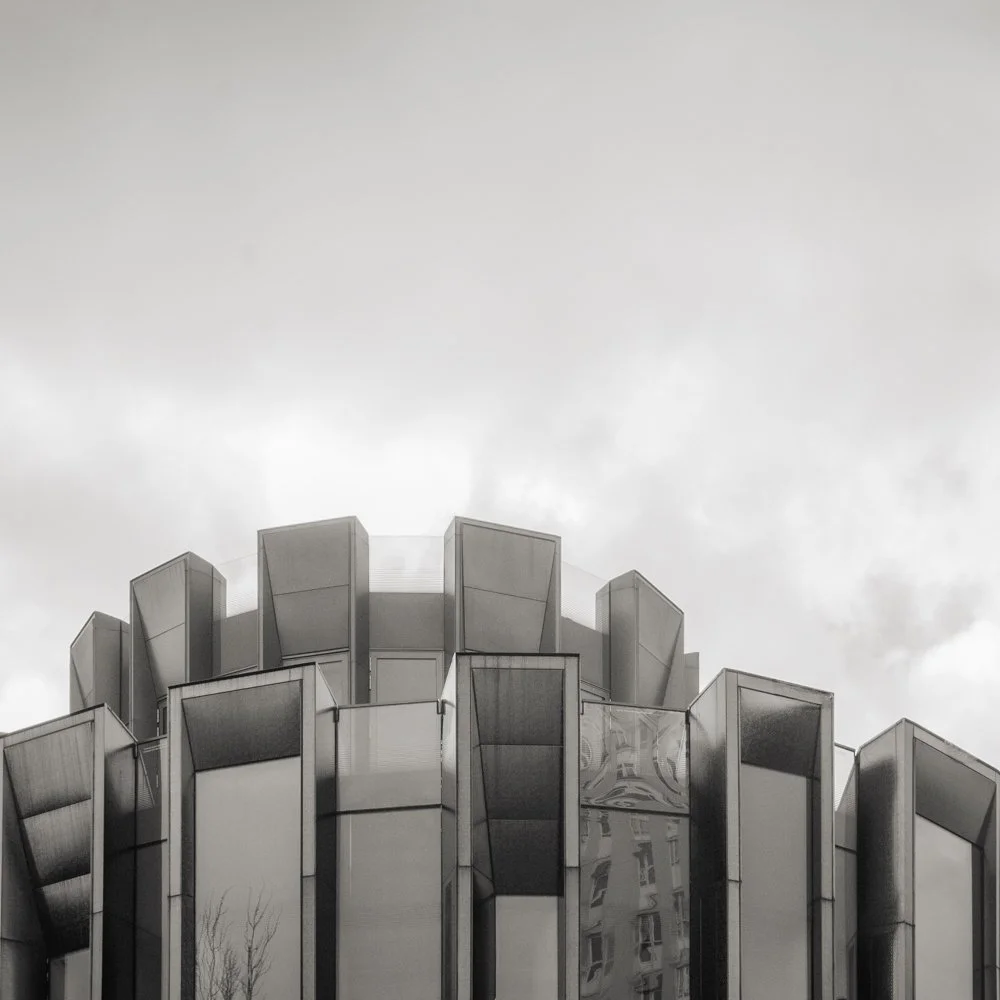
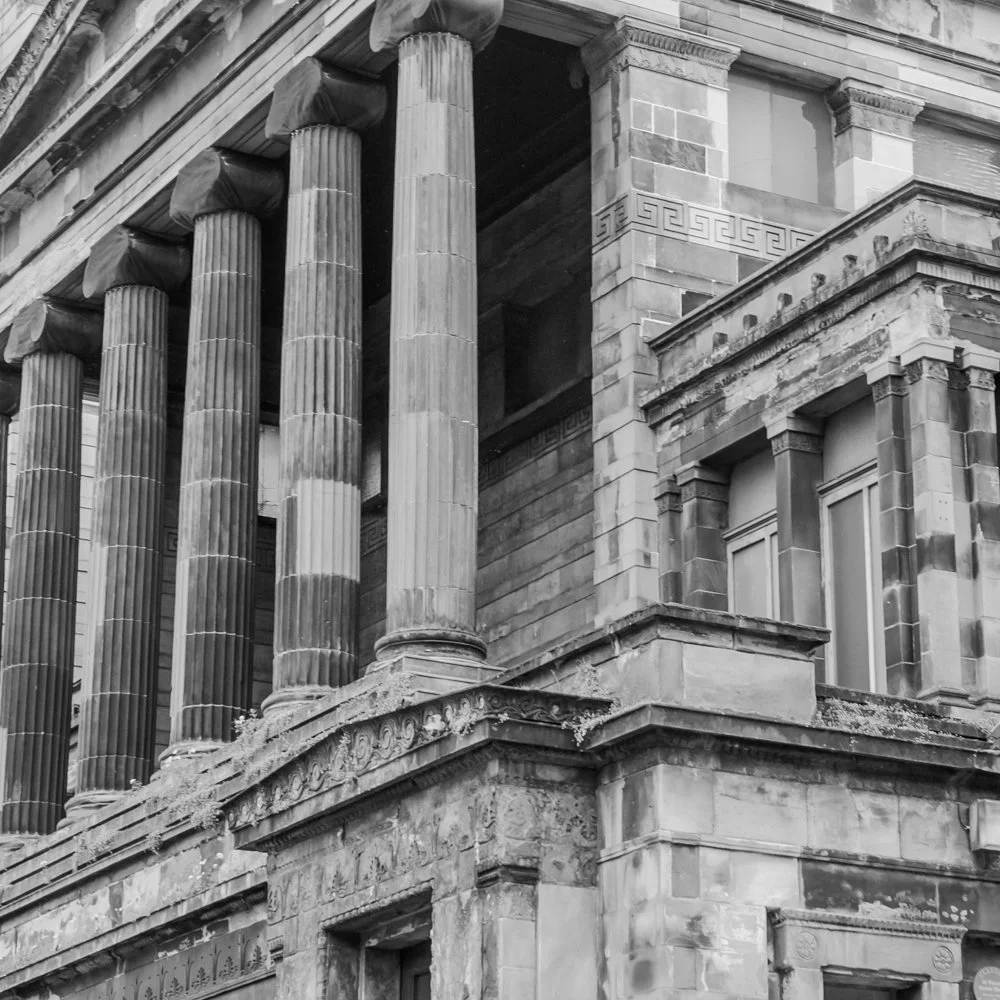
Key themes in Glasgow
Urban Social Housing
Contemporary social housing is drawing from and responding to a rich heritage from historic tenements and post-war housing to provide new neighbourhoods focussed on density, affordability, community and place-making. Bringing homes and people back into the city centre area is one of the key drivers of the current city plan.
Conservation & Adaptive Reuse
Discover how historic buildings, neighbourhoods and urban landscapes are being conserved, adapted and given new uses, and examine the tensions between heritage protection and a changing city.
Urban Renewal
Look at how former industrial areas and underused parts of the city are being transformed through new housing, public space, cultural uses and mixed-use development.
Riverside Development
Follow the changing relationship between the city and its rivers. Explore the regeneration of the Clyde and the emerging transformation of Edinburgh's waterfront, considering how former industrial landscapes can become connected, mixed-use urban neighbourhoods.
Net Zero & Sustainable Cities
Examine how architecture and urban design are responding to climate change, from retrofit and reuse to low-carbon construction, active travel, green infrastructure and the creation of more resilient neighbourhoods.
Built around your questions
These themes are starting points rather than fixed itineraries. We can develop programmes around particular architects, projects, neighbourhoods, planning strategies or areas of professional interest.